





Economics and Finance Department

Latest Events

Recent Developments and Uphill Battles in Natural Language

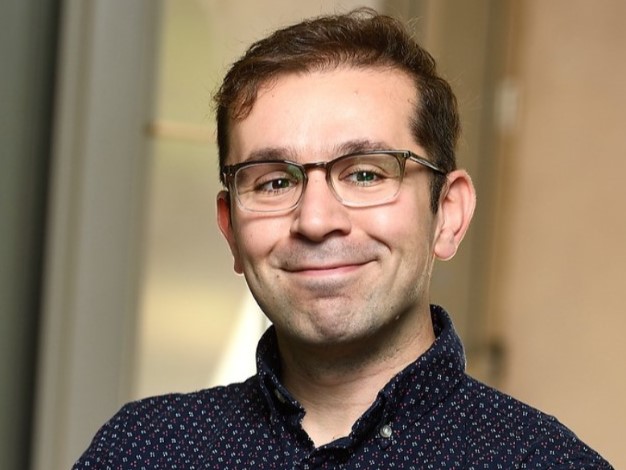
Daniel Khashabi

August 9, 2023

Sudden Liberalization and the Baby Boom of Managers

Miklos Koren

August 9, 2023

Local Recessions: Evidence from Bank Liquidity Squeezes

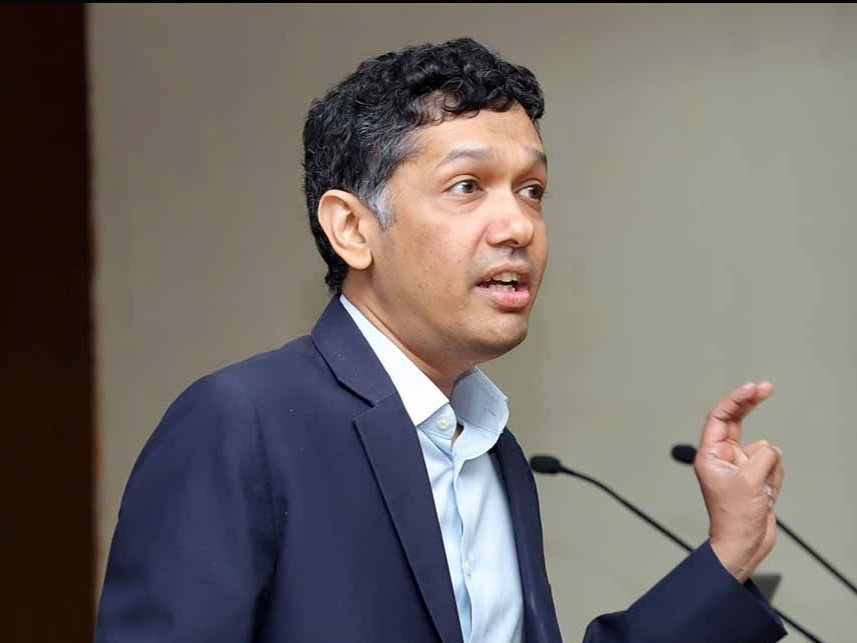
Rajkamal Iyer

August 9, 2023

Political Economics

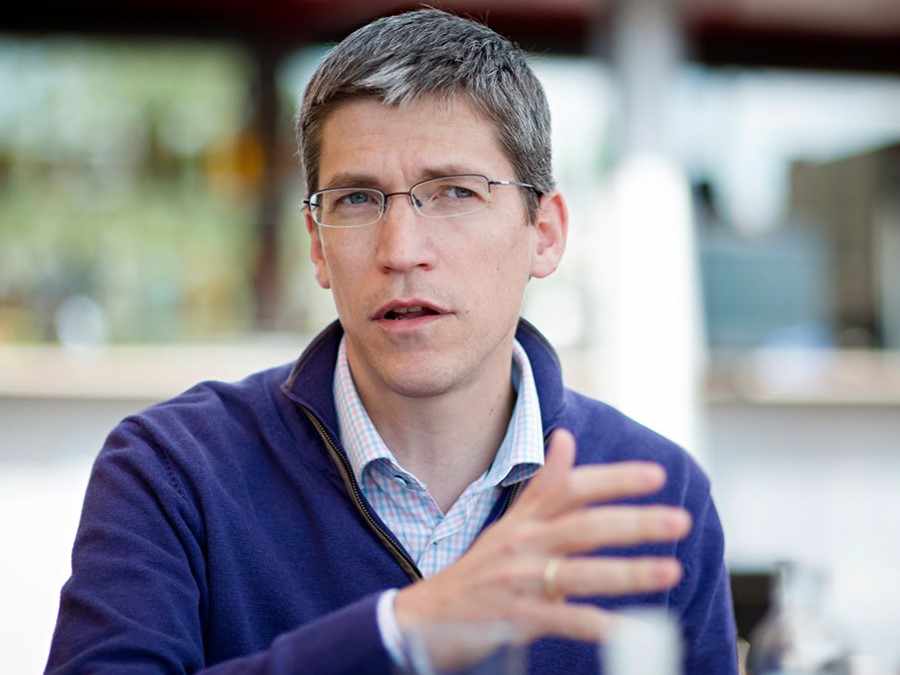
Miklos Koren

August 9, 2023

Upcoming Events

Daniel Khashabi

December 25, 2023

Miklos Koren

December 22, 2023

Rajkamal Iyer

December 20, 2023

Claudio Michelacci

December 18, 2023

Hamid Firooz

December 18, 2023

Phoebe Koundouri

December 18, 2023

Recent Publications

Abstract

Using Iran’s unexpected flood in April 2019 as a natural experiment, we show that local branches bridge the time gap between the disaster and governmental aids by immediately increasing their lending for two months following the flood. Analyzing proprietary information on more than 53,000 farmers, we find that farmers with a stronger relationship with their branch - particularly younger and females - are more likely to receive a recovery loan. Our findings underscore that despite recent technological advancements, relationship-based branch banking is still important for agrarian societies during catastrophic events.


Keywords: Bank branch, Relationship lending, Climate change, Agricultural loans

JEL Classification: G21, G28, O13, Q14, Q54

Read More

Abstract

What is the role played by marketplace lending after natural disasters? Analyzing a sample of more than one and a half million observations from Lending Club around the 33 worst natural disasters that occurred between 2013 and 2017, we find that there is an increase in the demand for marketplace loans by almost 10%. Yet, the platform does not restrict lending to individuals in the affected areas, nor do we observe an increase in interest rates. Interestingly, the performance of borrowers who receive loans after a natural disaster is not significantly different from the borrowers during normal times, indicating that the platform is competent at efficiently meeting the extra loan demand.


Keywords: Marketplace Lending, FinTech, Natural Disasters, Access to Finance, Credit Risk Assessment

JEL Classification: D14, E51, G2, Q54

Read More

Abstract

This paper primarily studies the pricing of insolvent banks that are sold under the purchase and assumption resolution method of the Federal Deposit Insurance Corporation (FDIC). We analyze 586 acquisitions of solvent and insolvent U.S. banks between 2009:Q1 and 2016:Q3 and find that acquirers pay higher prices for insolvent banks with more branches or with a national charter. Our findings hence suggest that the franchise value is not only embedded in failed banks’ core deposits but also in the size of their branch networks. Moreover, bidders with more capital tend to pay lower prices for failed banks. Failed banks are sold at higher prices in more competitive auctions.


Keywords: Bank failures, Resolution, FDIC

JEL Classification: G21, G28

Read More

Abstract

Using Iran’s unexpected flood in April 2019 as a natural experiment, we show that local branches bridge the time gap between the disaster and governmental aids by immediately increasing their lending for two months following the flood. Analyzing proprietary information on more than 53,000 farmers, we find that farmers with a stronger relationship with their branch - particularly younger and females - are more likely to receive a recovery loan. Our findings underscore that despite recent technological advancements, relationship-based branch banking is still important for agrarian societies during catastrophic events.


Keywords: Bank branch, Relationship lending, Climate change, Agricultural loans

JEL Classification: G21, G28, O13, Q14, Q54

Read More

Abstract

What is the role played by marketplace lending after natural disasters? Analyzing a sample of more than one and a half million observations from Lending Club around the 33 worst natural disasters that occurred between 2013 and 2017, we find that there is an increase in the demand for marketplace loans by almost 10%. Yet, the platform does not restrict lending to individuals in the affected areas, nor do we observe an increase in interest rates. Interestingly, the performance of borrowers who receive loans after a natural disaster is not significantly different from the borrowers during normal times, indicating that the platform is competent at efficiently meeting the extra loan demand.


Keywords: Marketplace Lending, FinTech, Natural Disasters, Access to Finance, Credit Risk Assessment

JEL Classification: D14, E51, G2, Q54

Read More

Abstract

This paper primarily studies the pricing of insolvent banks that are sold under the purchase and assumption resolution method of the Federal Deposit Insurance Corporation (FDIC). We analyze 586 acquisitions of solvent and insolvent U.S. banks between 2009:Q1 and 2016:Q3 and find that acquirers pay higher prices for insolvent banks with more branches or with a national charter. Our findings hence suggest that the franchise value is not only embedded in failed banks’ core deposits but also in the size of their branch networks. Moreover, bidders with more capital tend to pay lower prices for failed banks. Failed banks are sold at higher prices in more competitive auctions.


Keywords: Bank failures, Resolution, FDIC

JEL Classification: G21, G28

Read More

Flood, Farms and Credit: The Role of Branch Banking in the Era of Climate Change

Abstract

Using Iran’s unexpected flood in April 2019 as a natural experiment, we show that local branches bridge the time gap between the disaster and governmental aids by immediately increasing their lending for two months following the flood. Analyzing proprietary information on more than 53,000 farmers, we find that farmers with a stronger relationship with their branch – particularly younger and females – are more likely to receive a recovery loan. Our findings underscore that despite recent technological advancements, relationship-based branch banking is still important for agrarian societies during catastrophic events.

Keywords: Bank branch, Relationship lending, Climate change, Agricultural loans

JEL Classification: G21, G28, O13, Q14, Q54

Read More

Marketplace Lending: A Resilient Alternative in the Face of Natural Disasters?

Abstract

What is the role played by marketplace lending after natural disasters? Analyzing a sample of more than one and a half million observations from Lending Club around the 33 worst natural disasters that occurred between 2013 and 2017, we find that there is an increase in the demand for marketplace loans by almost 10%. Yet, the platform does not restrict lending to individuals in the affected areas, nor do we observe an increase in interest rates. Interestingly, the performance of borrowers who receive loans after a natural disaster is not significantly different from the borrowers during normal times, indicating that the platform is competent at efficiently meeting the extra loan demand.

Keywords: Marketplace Lending, FinTech, Natural Disasters, Access to Finance, Credit Risk Assessment

JEL Classification: D14, E51, G2, Q54

Read More

The Sale of Failed Banks: The Characteristics of Acquirers – As Well as of the Acquired – Matter

Abstract

This paper primarily studies the pricing of insolvent banks that are sold under the purchase and assumption resolution method of the Federal Deposit Insurance Corporation (FDIC). We analyze 586 acquisitions of solvent and insolvent U.S. banks between 2009:Q1 and 2016:Q3 and find that acquirers pay higher prices for insolvent banks with more branches or with a national charter. Our findings hence suggest that the franchise value is not only embedded in failed banks’ core deposits but also in the size of their branch networks. Moreover, bidders with more capital tend to pay lower prices for failed banks. Failed banks are sold at higher prices in more competitive auctions.

Keywords: Bank failures, Resolution, FDIC

JEL Classification: G21, G28

Read More

Full-Time Faculty Members

Mahdi Heidari

Ph.D. from Stockholm School of Economics, Sweden

Mohammad Morovati

Ph.D. from University of Texas at Austin

Behrang Kamali

Ph.D. from University of Pennsylvania

Layla Shiva

Ph.D. from Texas A&M University

Hosein Joshaghani

Ph.D. from University of Chicago

Pejman Abedifar

Ph.D. from LAPE, Université

Sepehr Ekbatani

Ph.D. from University of California, Los Angeles

Mehdi Haghbaali

Ph.D. from Georgia State University

Sahber Ahmadi-Renani

Ph.D. from University of Wisconsin-Madison

Adjunct Faculty Members

Farshad Hagh-Panah

Ph.D. from University of California at Berkeley

Mohammad Hoseini
Ph.D. from Tilburg University

Full-Time Faculty Members

Mahdi Heidari

Ph.D. from Stockholm School of Economics, Sweden

Mohammad Morovati

Ph.D. from University of Texas at Austin

Behrang Kamali
Ph.D. from University of Pennsylvania
Layla Shiva
Ph.D. from Texas A&M University
Hosein Joshaghani
Ph.D. from University of Chicago
Pejman Abedifar
Ph.D. from LAPE, Université
Sepehr Ekbatani

Ph.D. from University of California, Los Angeles

Mehdi Haghbaali
Ph.D. from Georgia State University
Sahber Ahmadi
Ph.D. from University of Wisconsin-Madison

Adjunct Faculty Members

Farshad Hagh-Panah
Ph.D. from University of California at Berkeley
Mohammad Hoseini
Ph.D. from Tilburg University

The Economics and Finance Program at TEIAS Offers:

Leading Faculty Members

The program benefits from full-time faculty members who are leading researchers in the areas of microeconomic theory, labor, development, education, macroeconomics, theoretical and empirical finance, banking etc..

Waived Tuition Fees and Monthly Stipend

In addition to having tuition fees waived, students will receive a monthly financial support to be able to pursue research without the need to resort to extra activities outside university. Extra research assistant positions are also available.

Travel

Travel Support

Full financial support will be provided for students to present their research outputs in reputable international conferences.

Cutting Edge Research

Students will be supervised by our faculty researchers who are active in various areas, opening room for a wide range of attractive research problems.

Computing Resources

Current research in economics is involved with working with big data and time consuming simulations and estimations. Our unique GPU servers provide the necessary means for carrying out such large-scale data processing and deep learning experiments.

Career Opportunity

There is a growing demand for Economists and researchers. Upon graduation, students will have the opportunity to pursue a career in academia or industry.

Admission

Admission to the program is highly selective; there are many more qualified applicants than there are places in the program. One of the following qualifications is necessary for your application to be processed:


  • National entrance exam (Konkoor) Rank: 1-99
  • Olympiad Rank: 1-15
  • Exceptional Talents (Straight)

Get in Touch with Economics Department

Join Our Newsletter